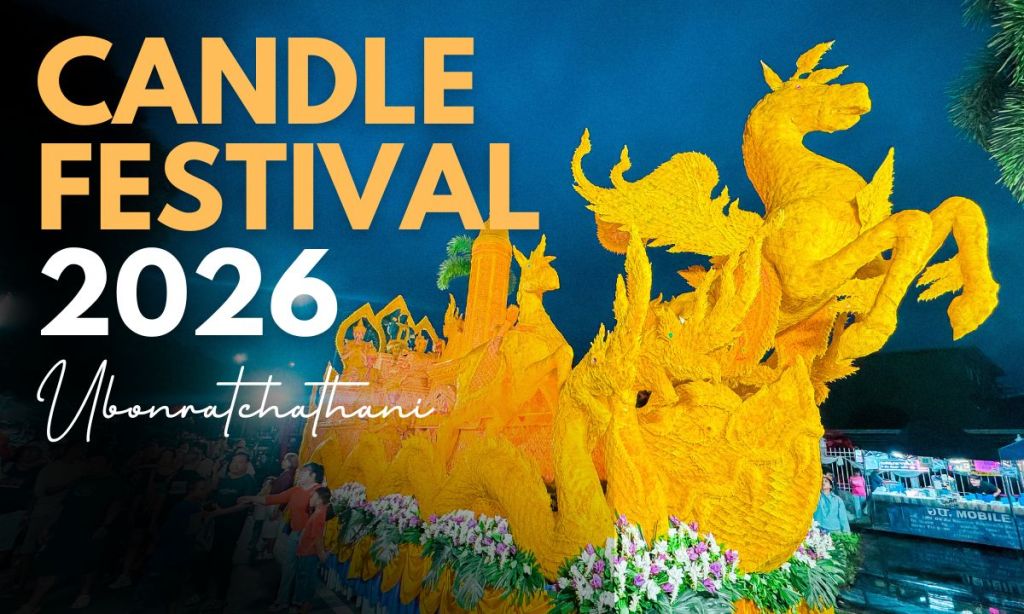
We came to Ubon Ratchathani in the last week of July, expecting a parade. What we got was something closer to a moving cathedral — floats the size of houses, carved entirely from wax, gliding through the heat while an entire province held its breath. And honestly? For us, this year felt different. 2026 marks the 125th edition of the Candle Festival, and Ubon has decided to celebrate accordingly.
If you’ve followed us long enough, you know we have a soft spot for Isan — the northeast that most travellers skip on their way to a beach. But once a year, in this quiet riverside city near the Laos border, that oversight becomes almost unthinkable. This is the festival Isan puts everything into.
What the Candle Festival actually is
Before we get to the spectacle, it helps to know why the wax matters. The Candle Festival — Hae Thian Phansa in Thai — is rooted in Khao Phansa, the start of Buddhist Lent, the three-month rains retreat when monks stay within their monasteries to study, meditate and practise. Traditionally, communities donated candles to the temples so the monks would have light through the long wet season.
Over the decades, that simple act of giving grew. And grew. What began as humble candle offerings became a competition of devotion and craftsmanship, until Ubon Ratchathani turned the whole thing into an art form the rest of Thailand now travels to see. Standing in front of one of these floats, you feel both threads at once: the deep religious quiet underneath, and the sheer human pride of a community that has been perfecting this for over a century.

When to go: the 2026 dates
Here’s the practical part, because timing is everything with this one.
The festival officially runs from 25 to 31 July 2026, but the heart of it — the part you plan your trip around — falls across 28 to 30 July at Thung Si Mueang, the big public park in the centre of town.
We’d break it down like this. On 28 July, the finished candle floats gather at Thung Si Mueang, where you can walk right up to them in daylight and see the carving detail before the crowds swallow everything. On 29 July — Asanha Bucha day — the processions begin, day and night. Then on the morning of 30 July, Khao Phansa itself, the grand parade winds through the city centre. That final morning is the showpiece, but if we’re being honest, the evenings of the 29th and 30th were where 2026 genuinely surprised us.
Why this year is bigger: the 125th edition
The Tourism Authority of Thailand has elevated the 125th procession into one of its Signature Thailand events, and you can feel the extra investment everywhere.
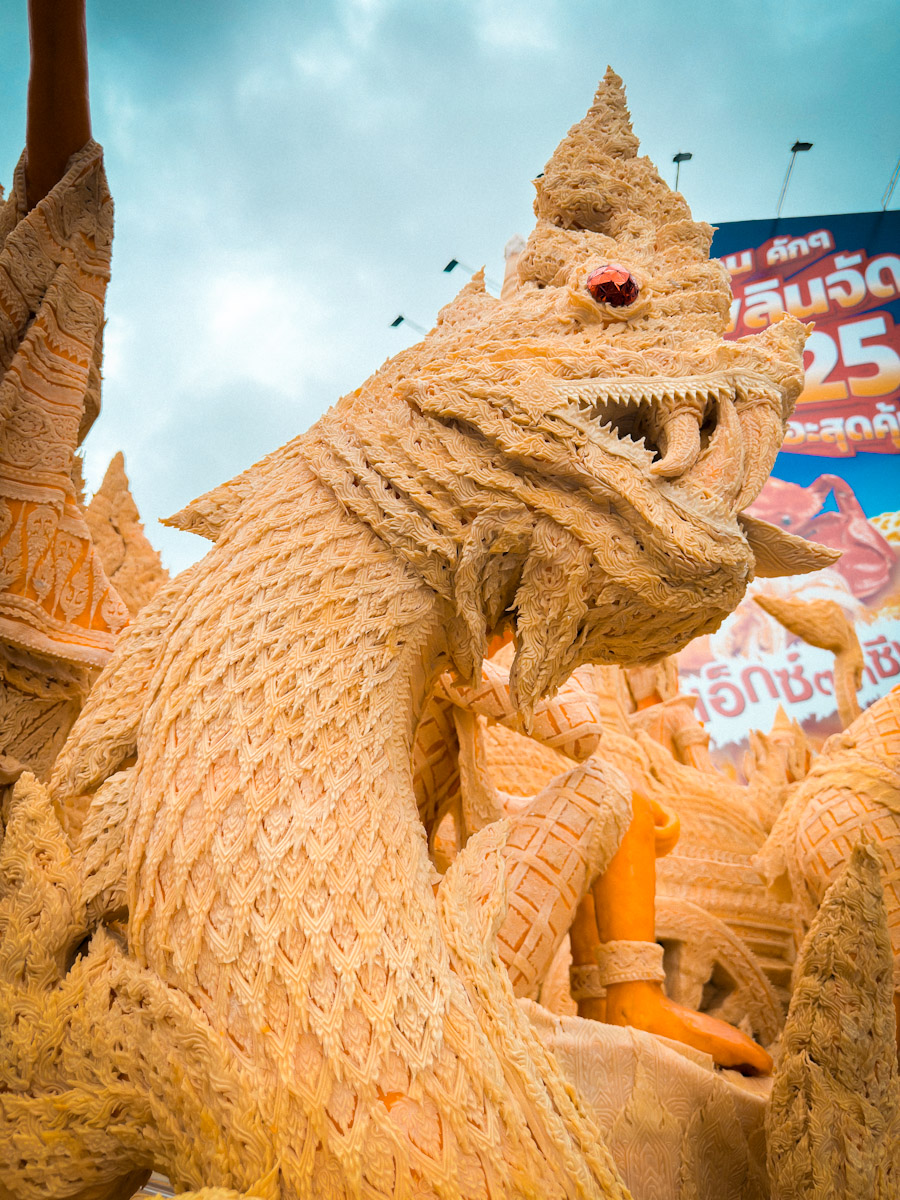
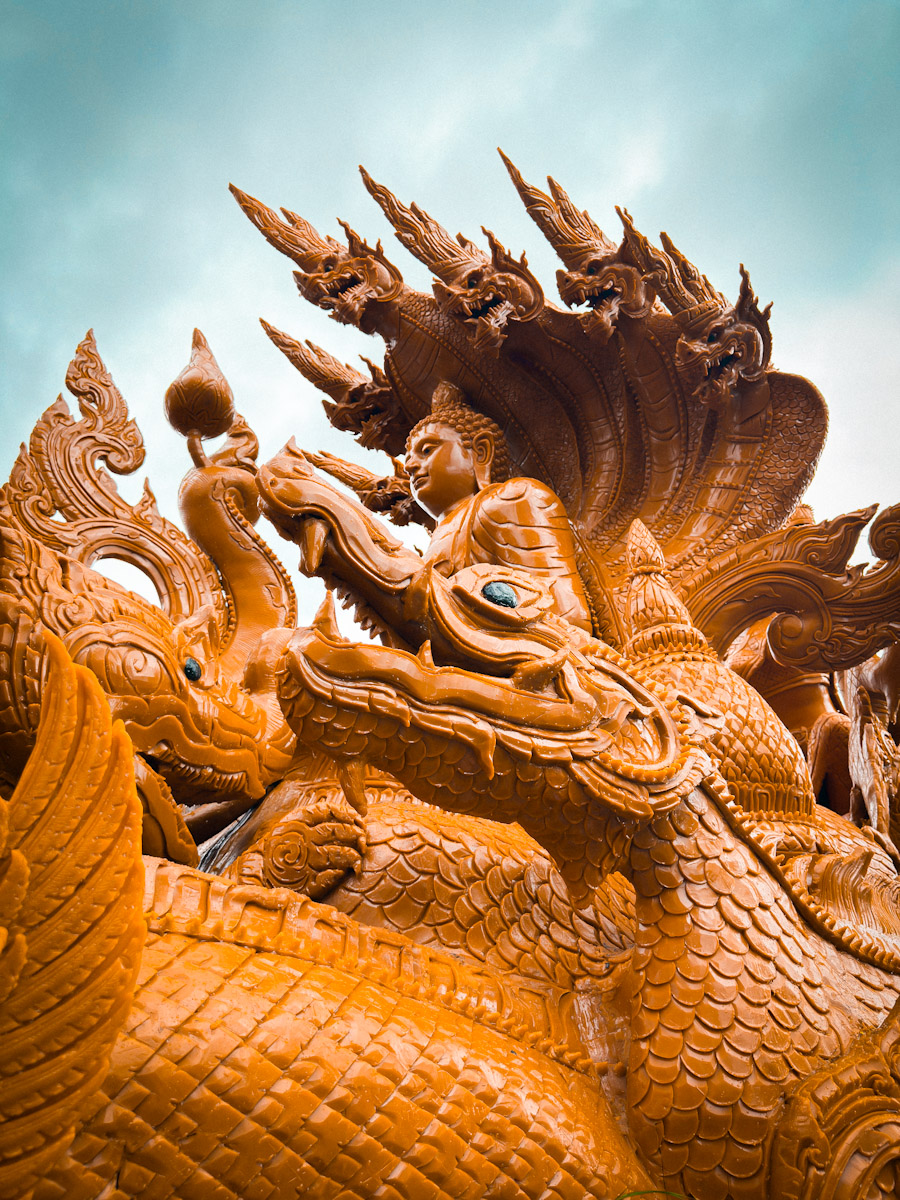
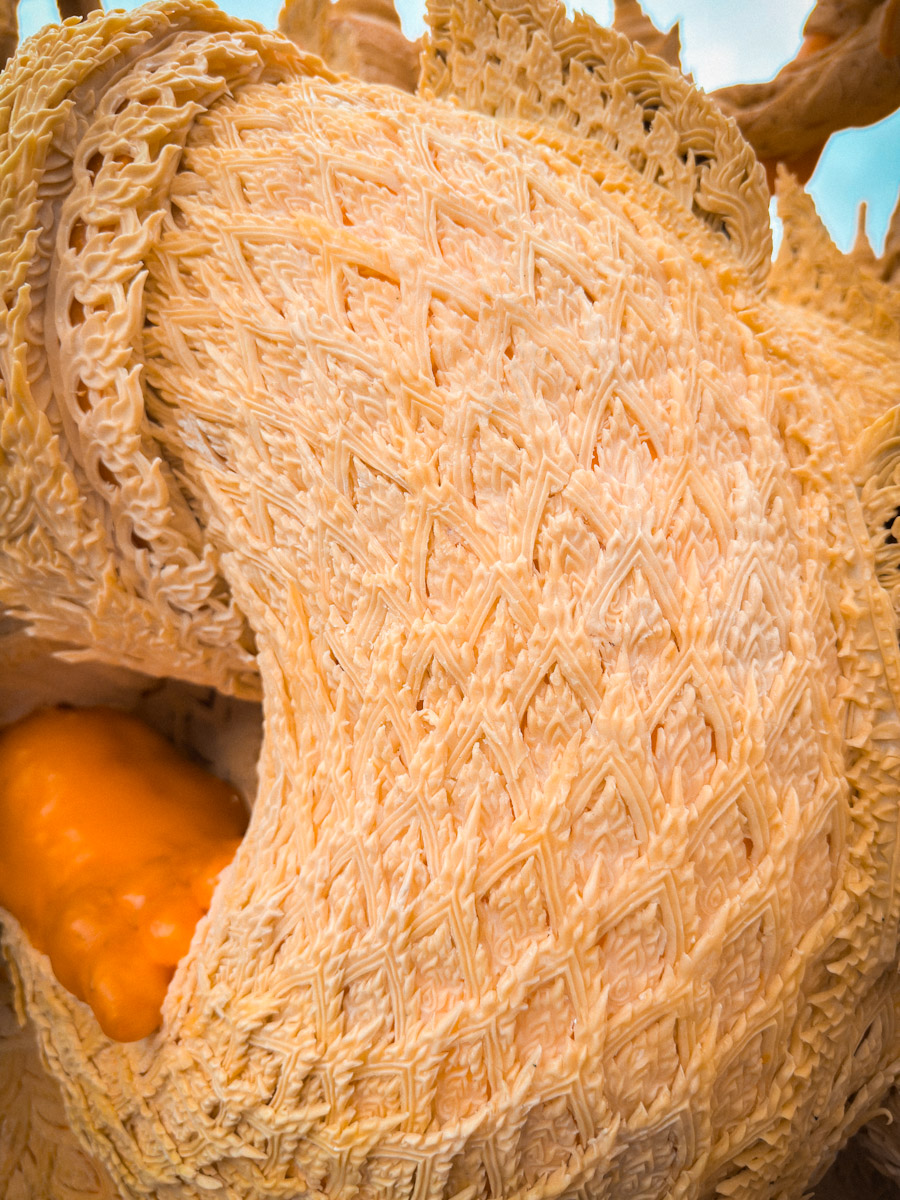
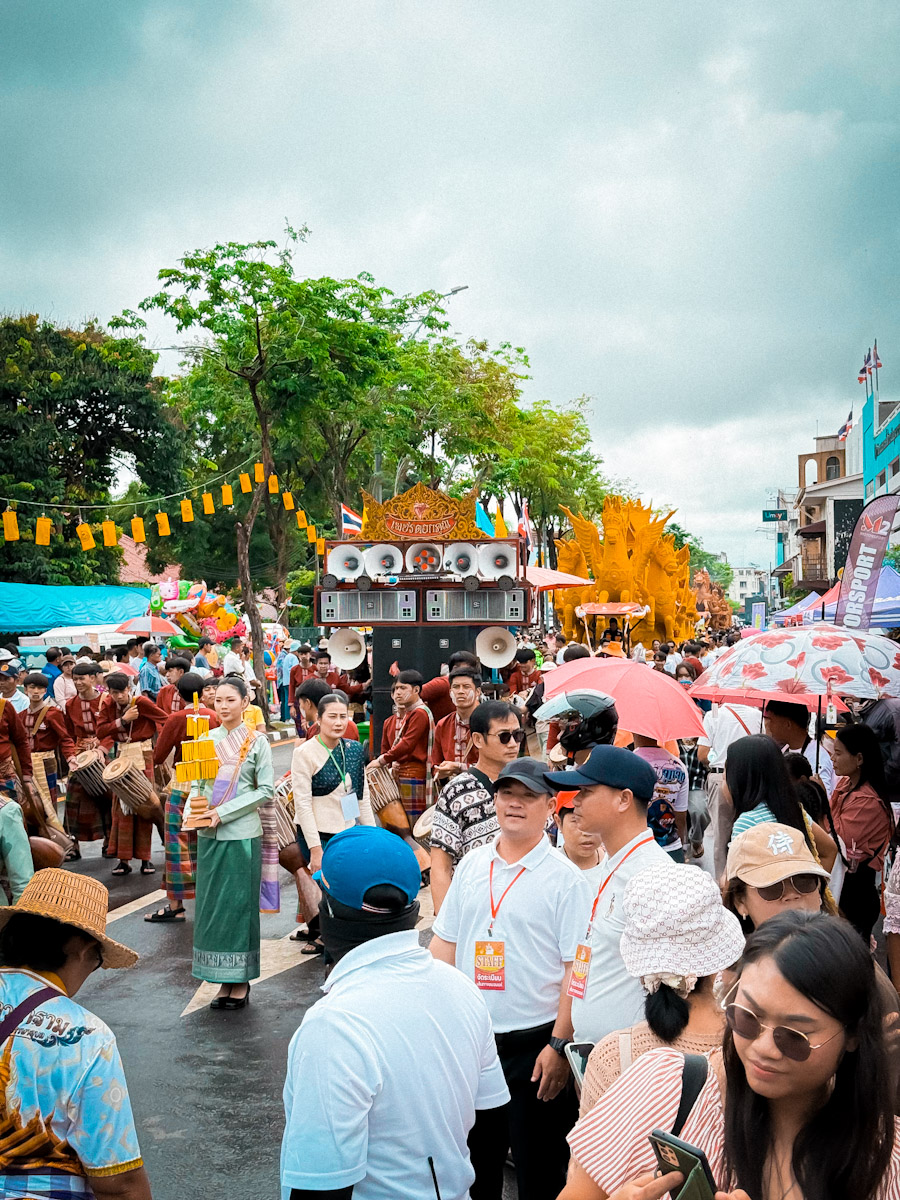
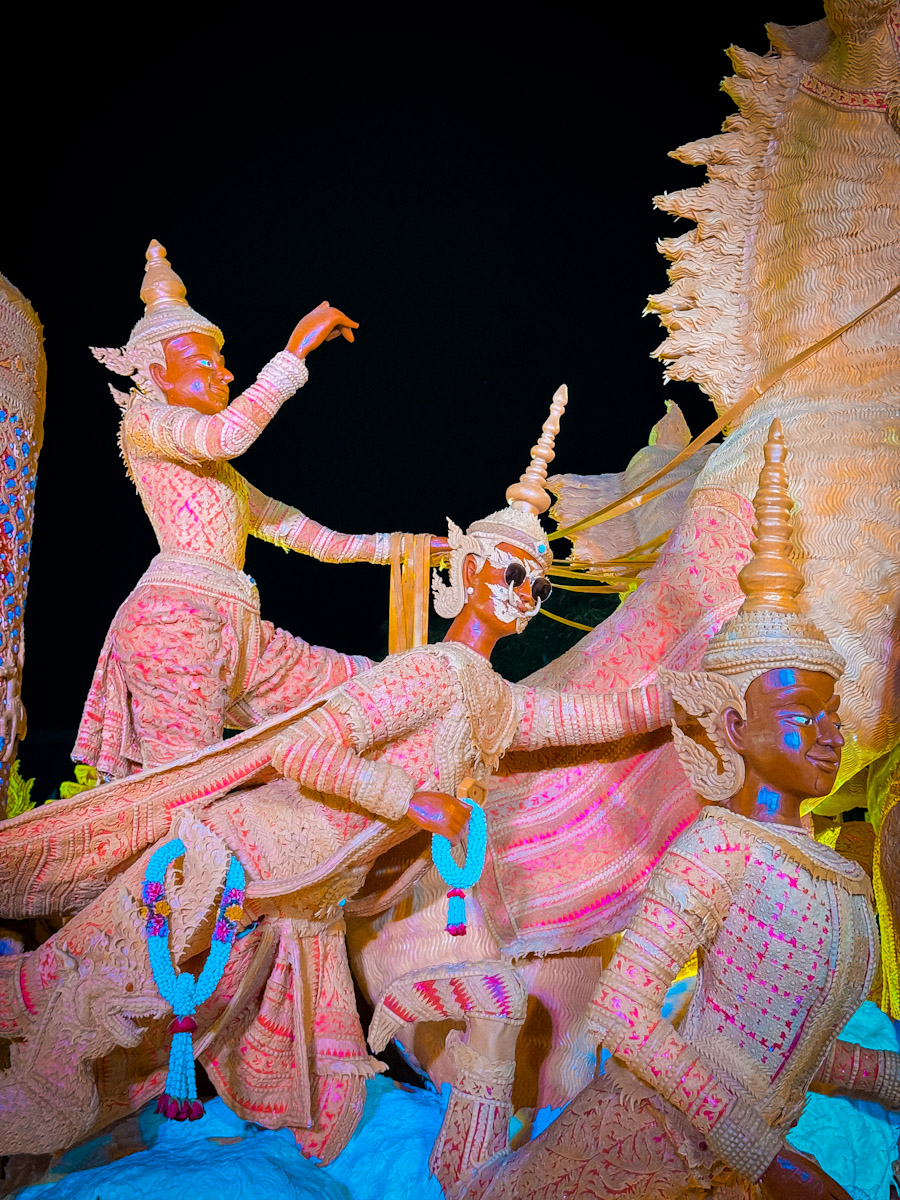
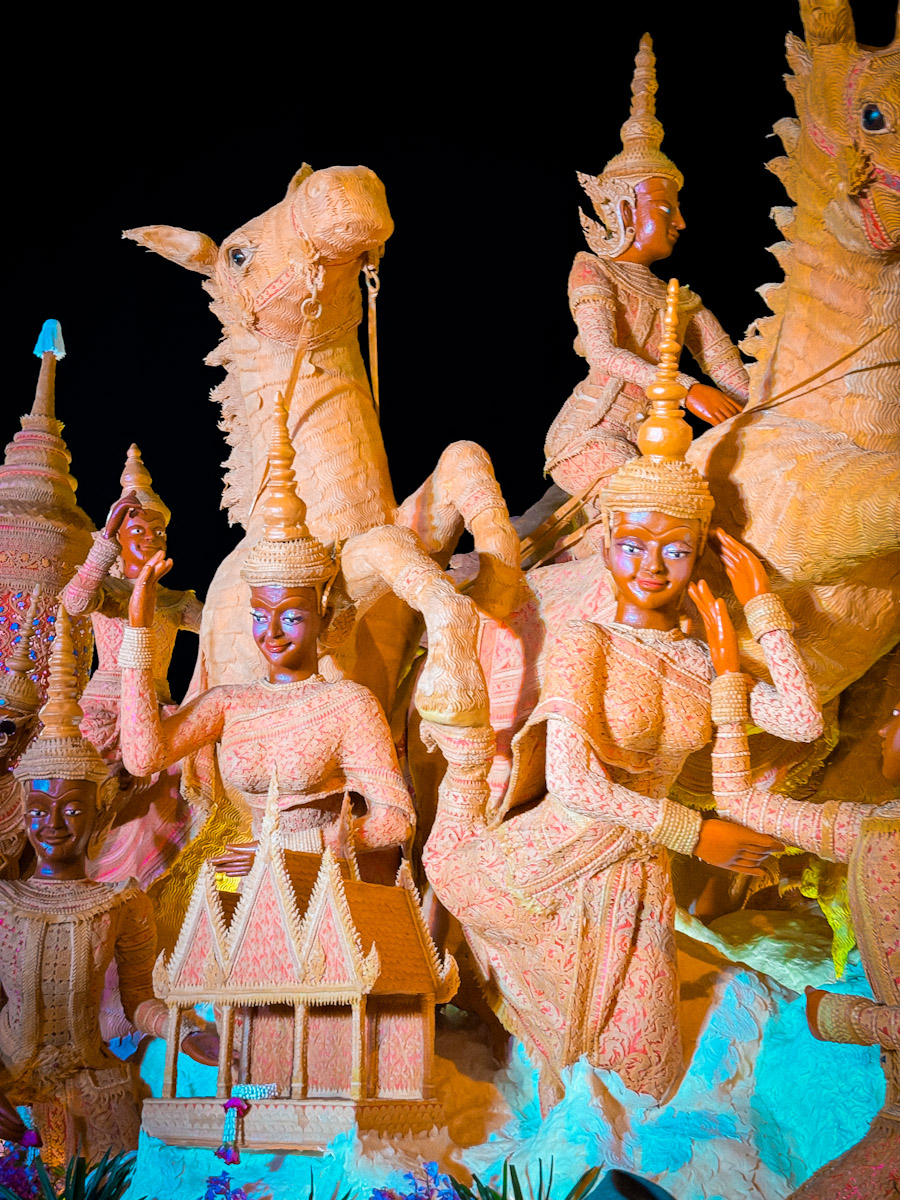
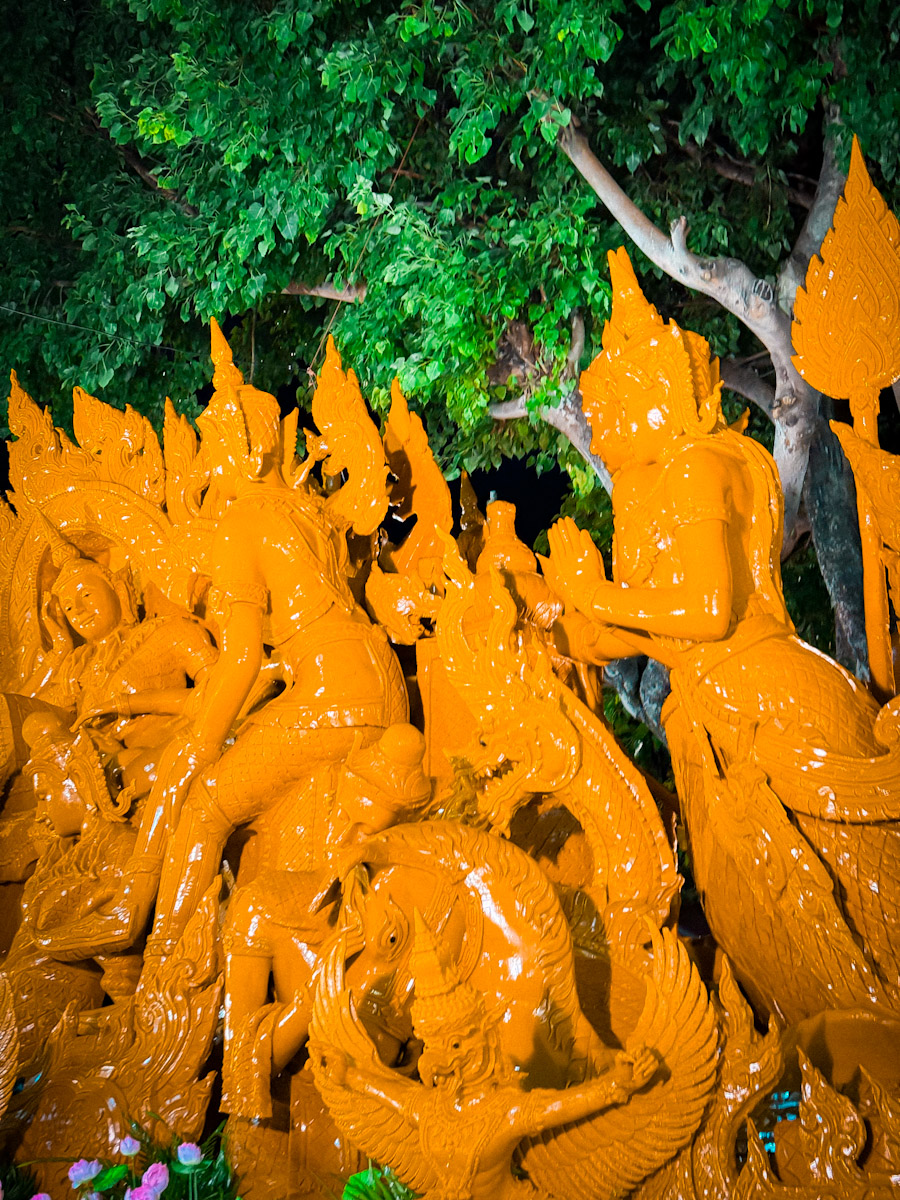
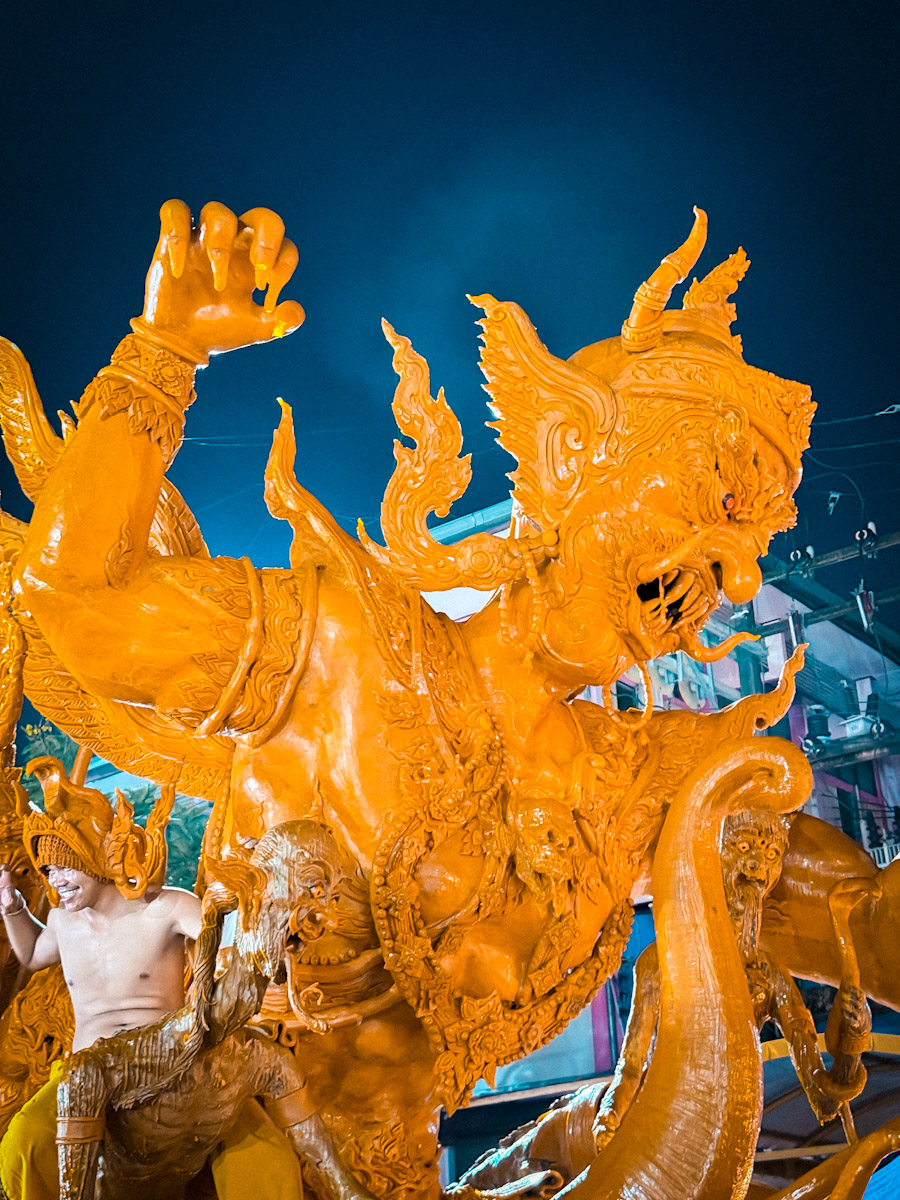
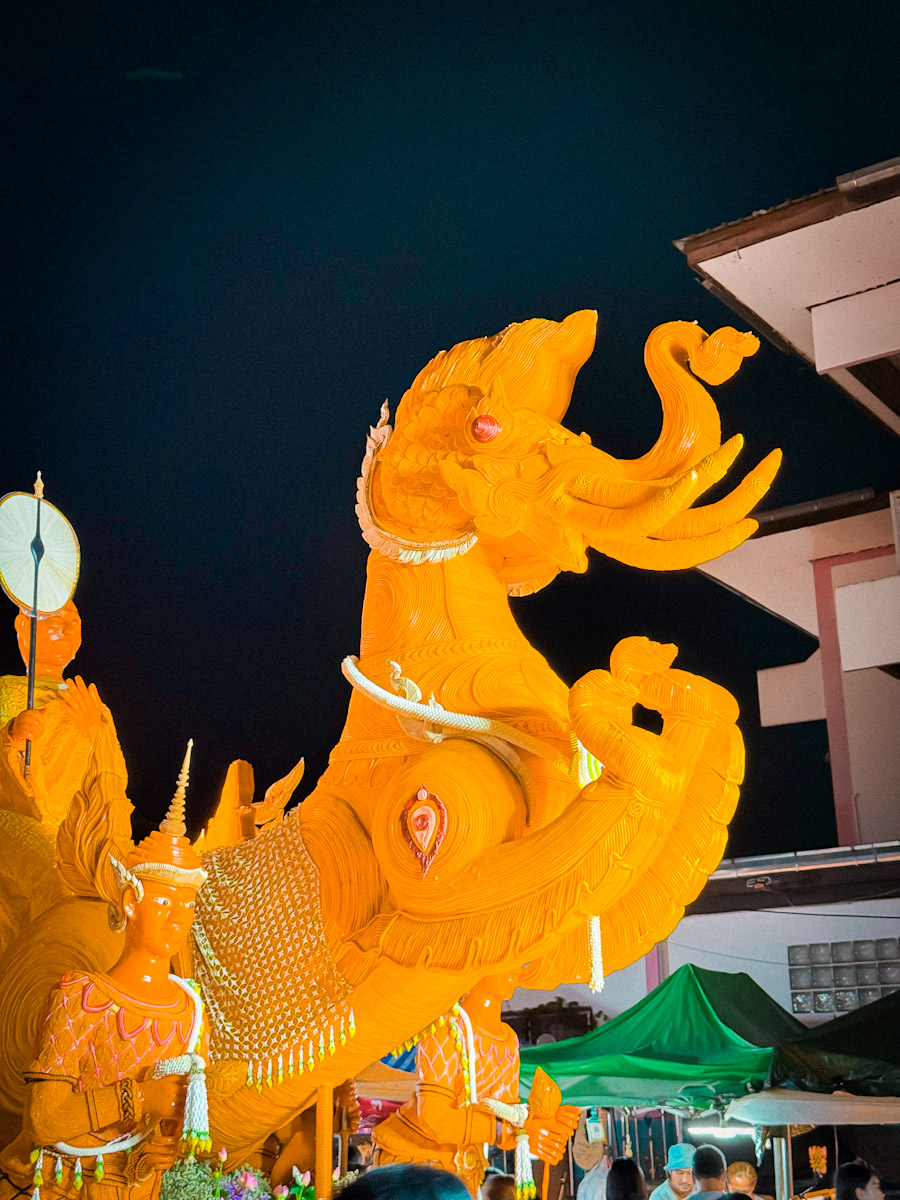
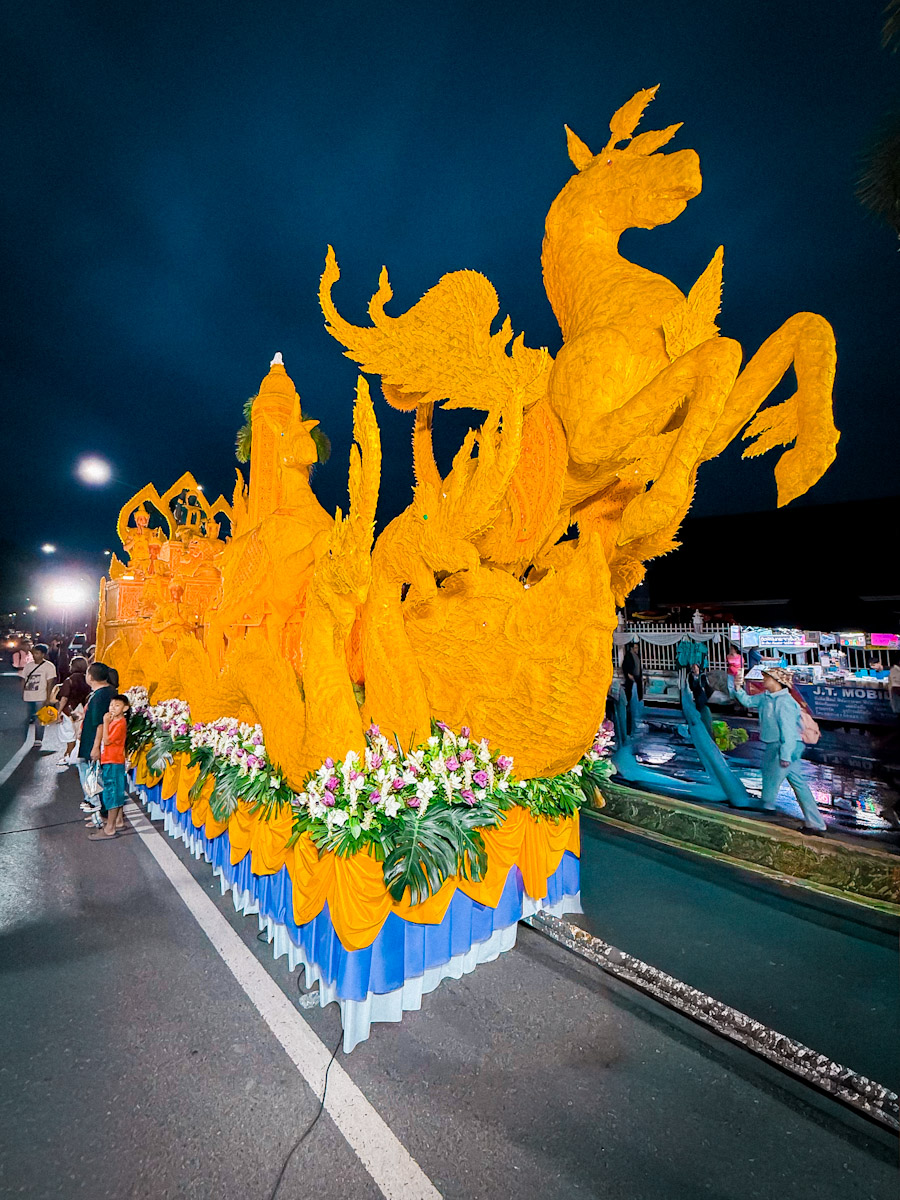
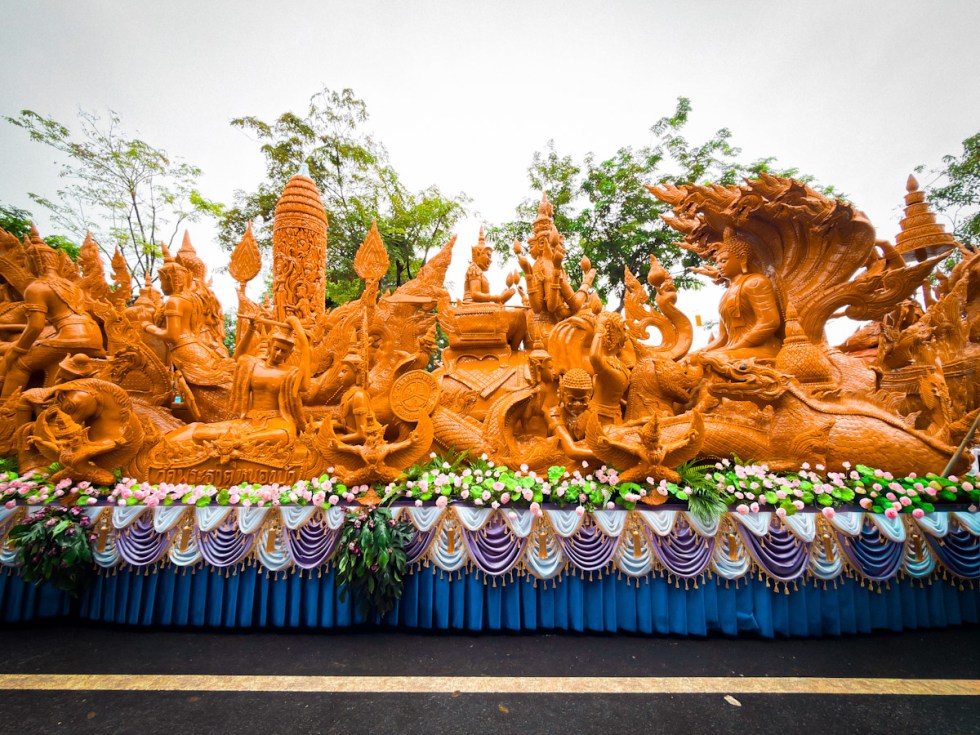
The candles themselves are the reason to come. This year there are 47 sculptures on show — one grand showcase float and 46 competition entries — spread across Ubon’s three traditional candle-making styles: the carved, the moulded, and the more contemporary mixed forms. Photos never quite prepare you. These aren’t candles in the way you’re picturing; they’re towering tableaux of nagas, deities and scenes from Buddhist lore, every curl and scale cut by hand from wax that will only ever exist for a few days. There’s something moving about craftsmanship this fragile and this ambitious.
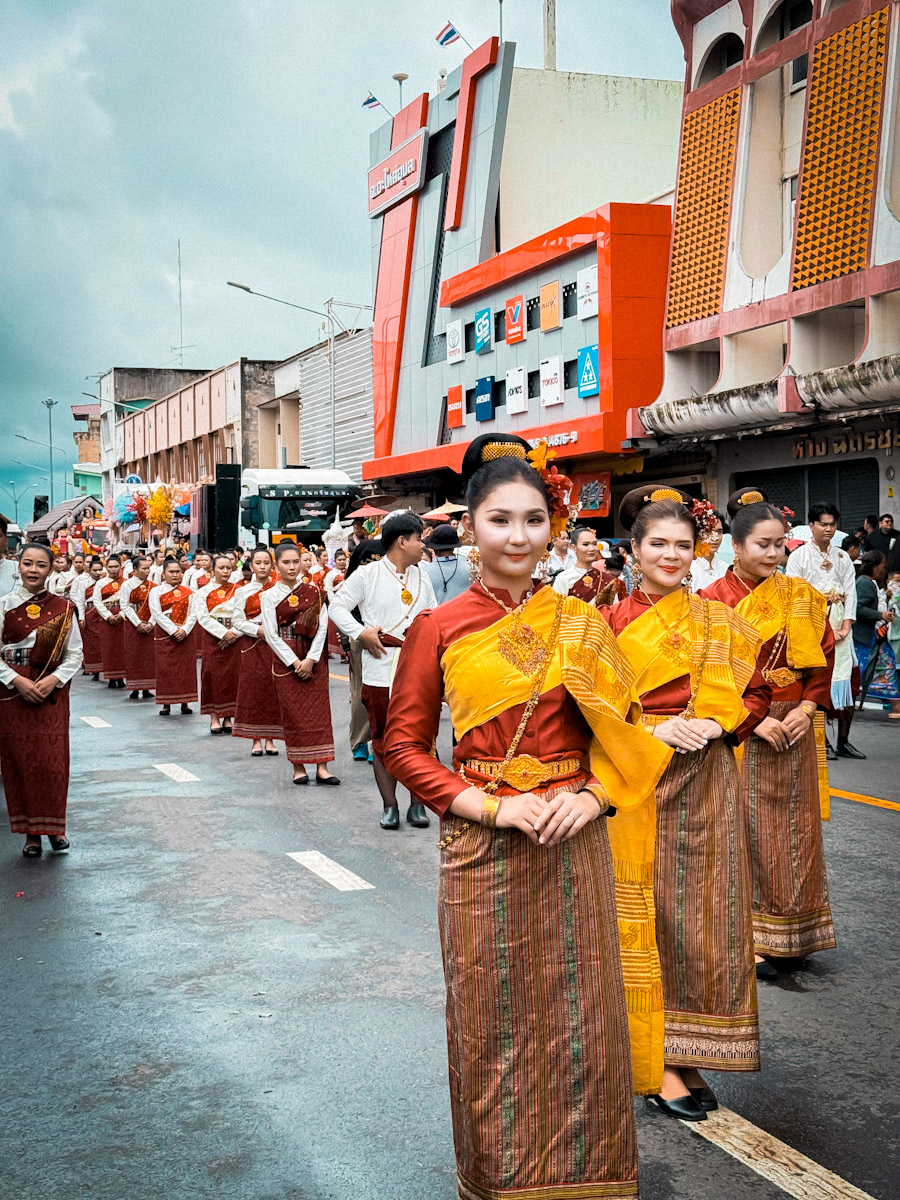
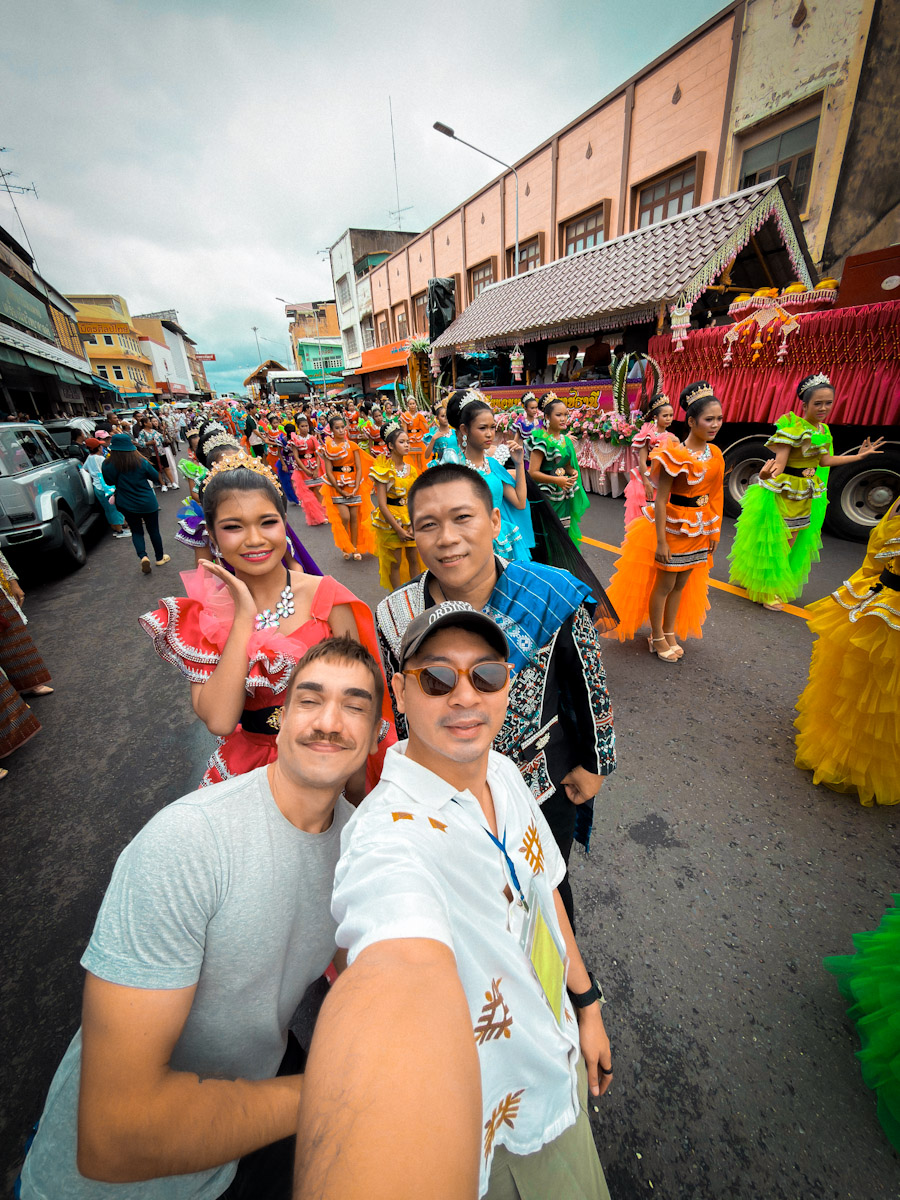
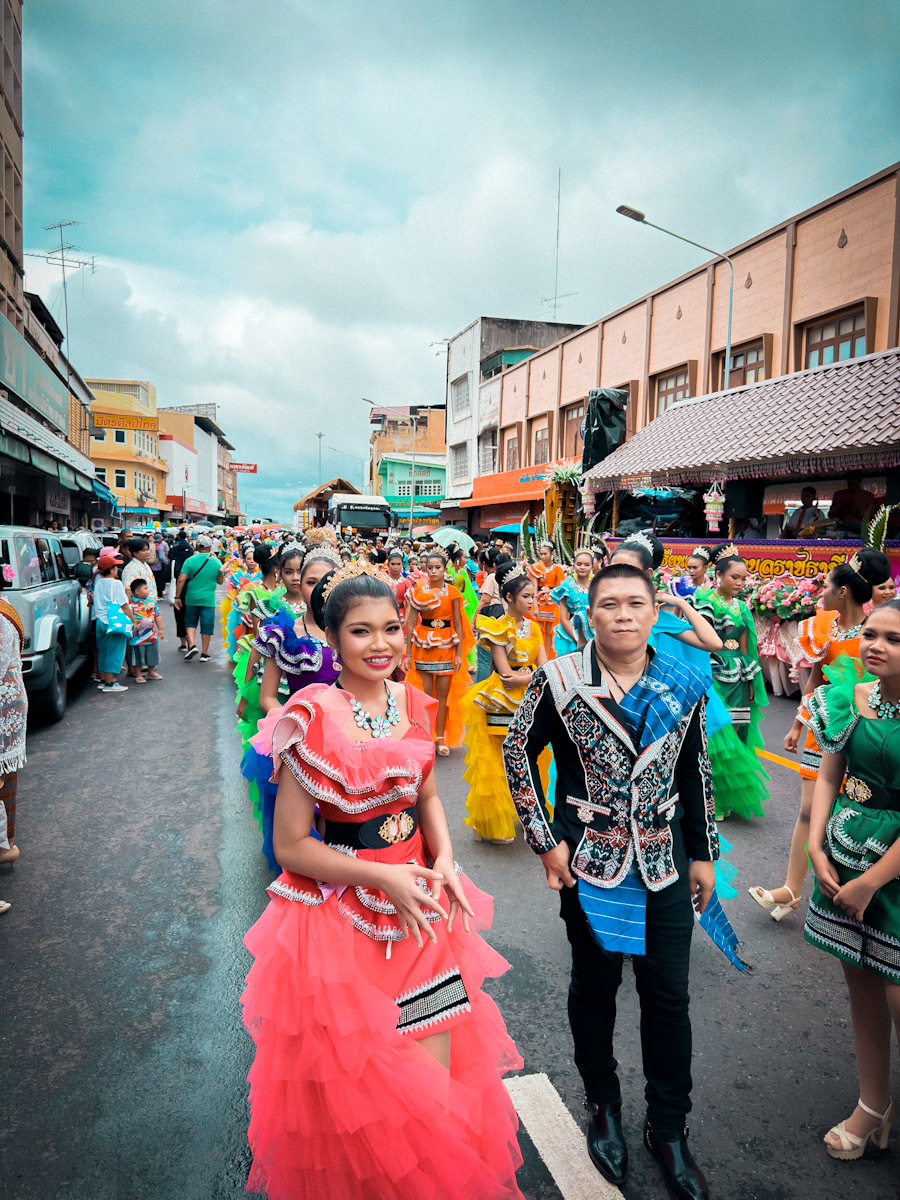
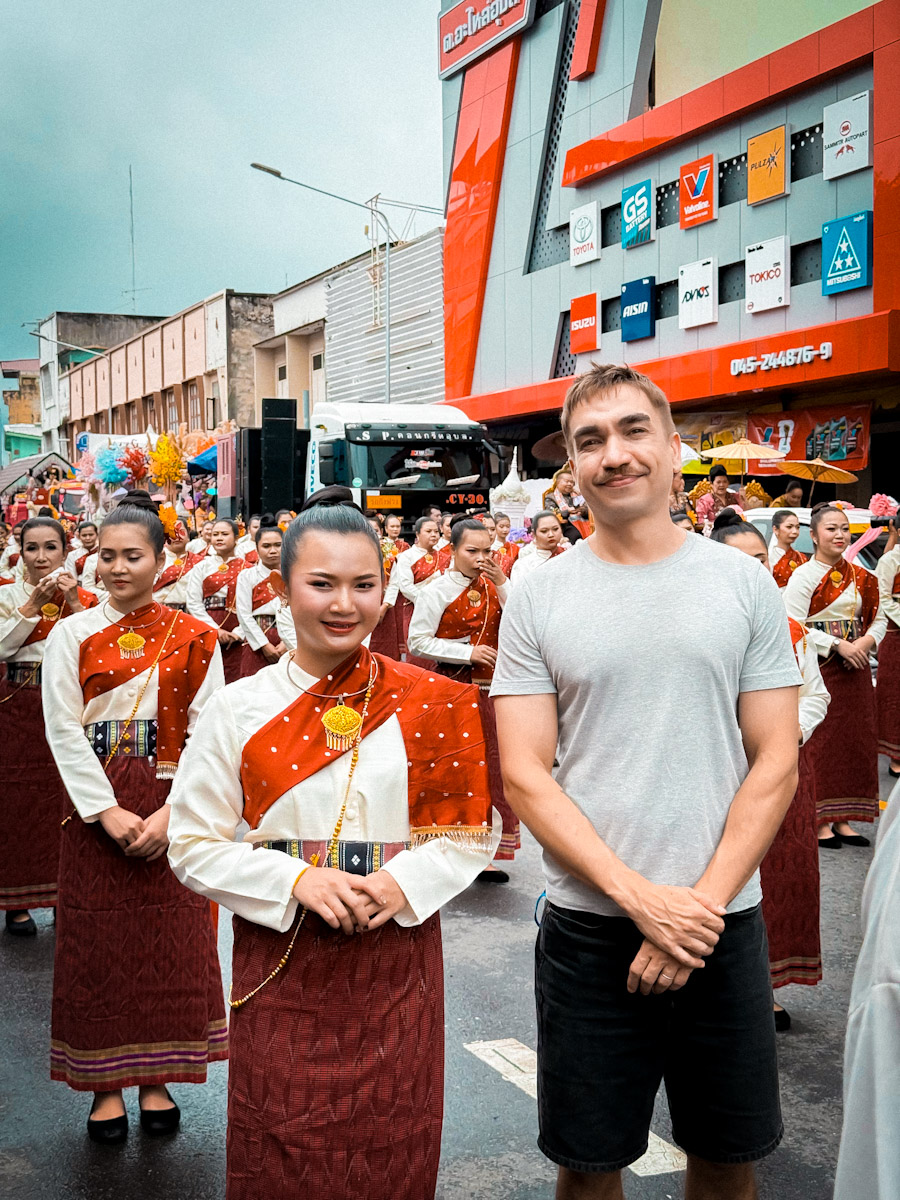
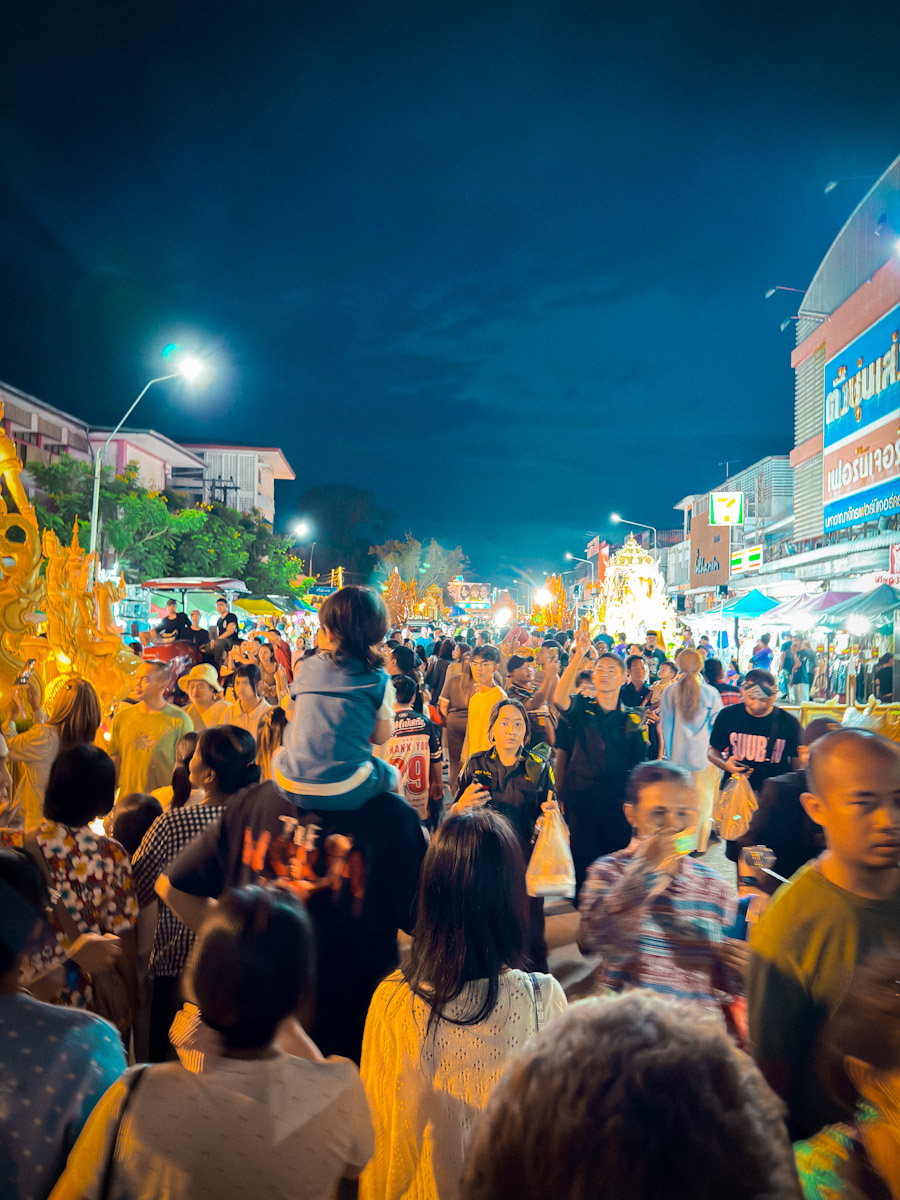
Around the floats, more than 37 dance troupes — temple communities, schools and cultural groups from across the province — fill the streets with movement and drums. It never feels like a show staged for tourists. It feels like a city celebrating itself, and letting us watch.
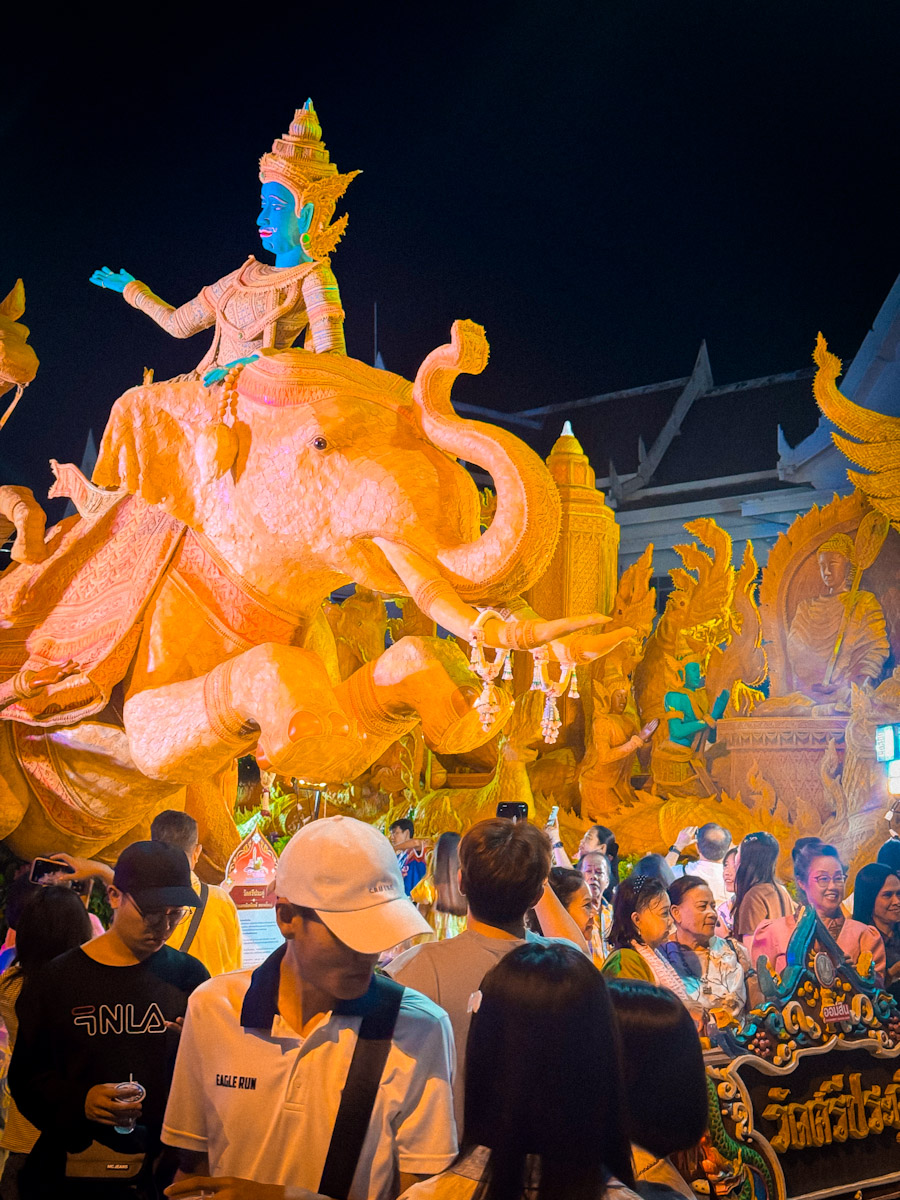
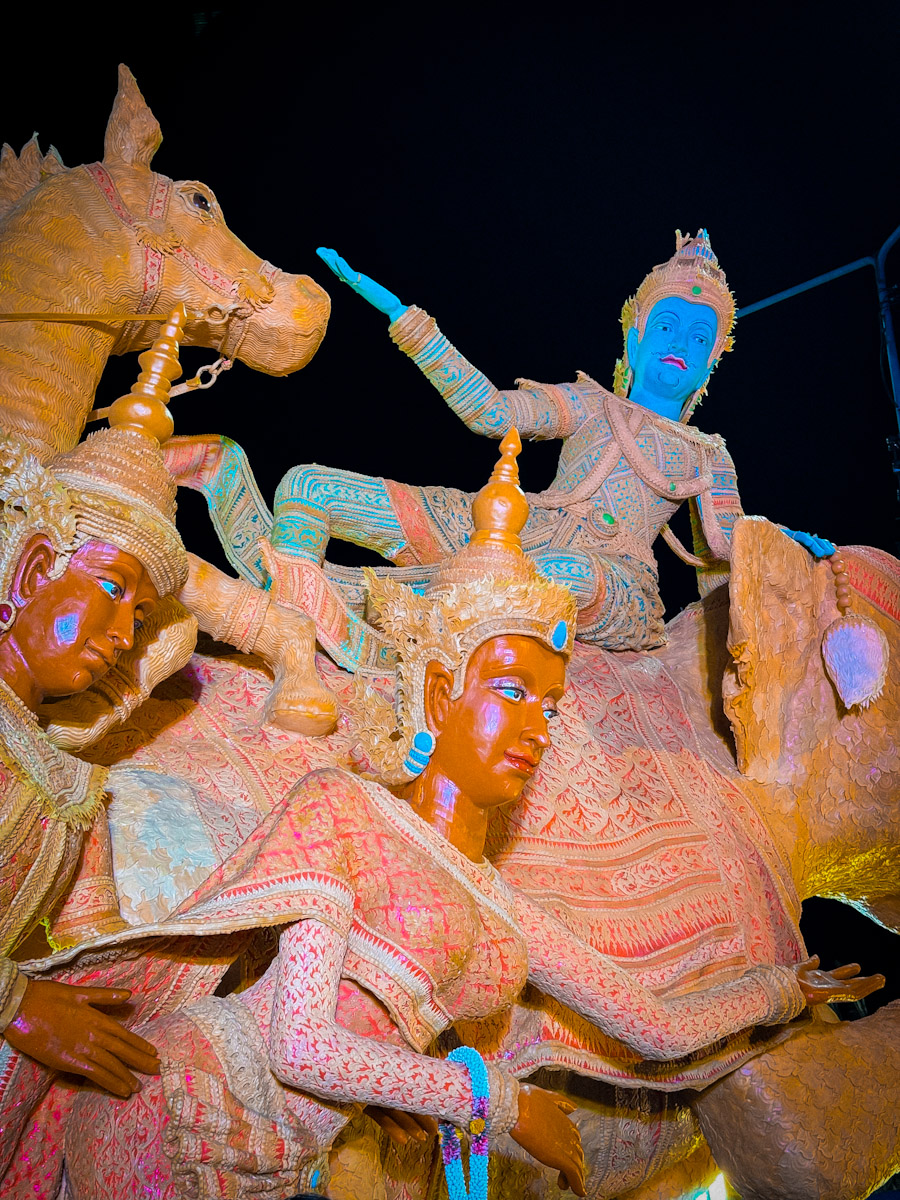
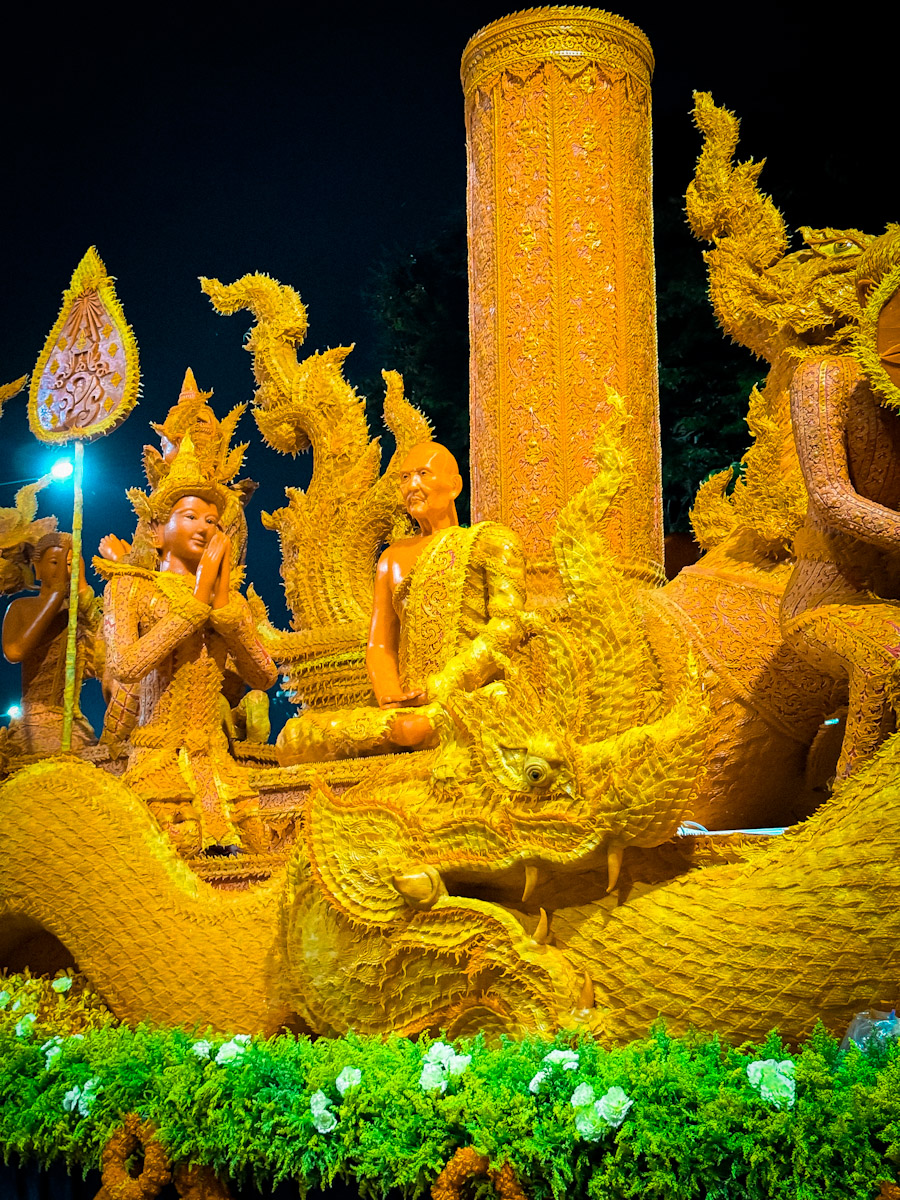
The night shows that stole it for us
We’ll admit we came for the daytime parade and stayed for the nights.
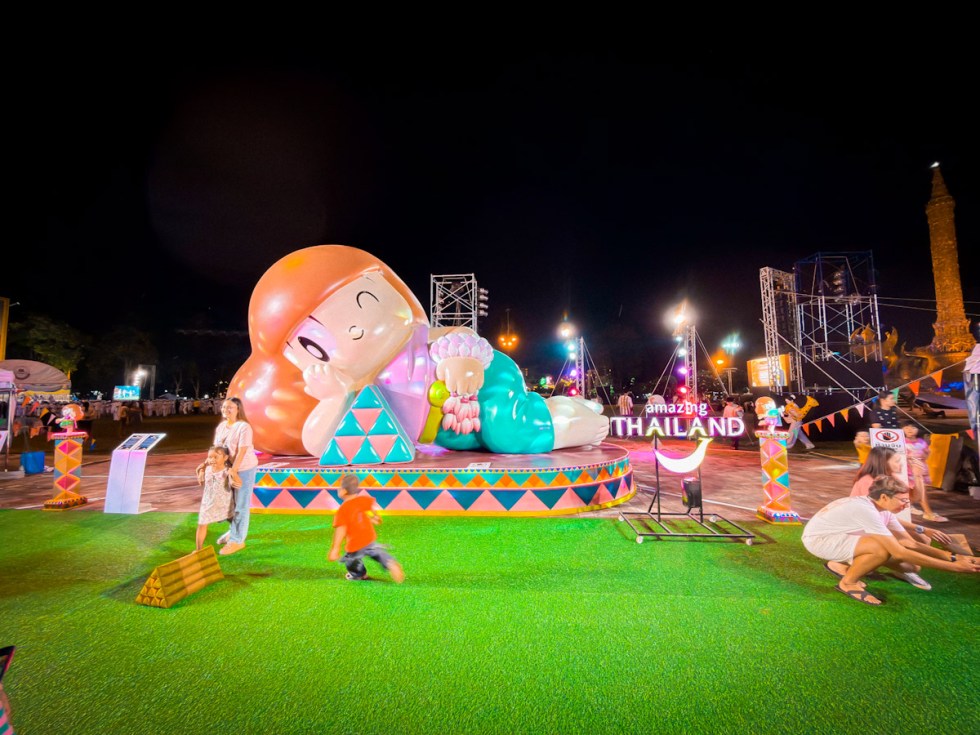
For the 125th edition, TAT added evening programming that the festival hasn’t really had before. On both the 29th and 30th, there are four light-and-sound performances each evening — a “Light & Sound Spectacular” that turns Thung Si Mueang into a canvas. Projection mapping washes over the park and the wax, pulling Ubon’s history and Buddhist stories out of the dark. Sitting on the grass as the carvings we’d studied in daylight suddenly glowed and moved with projected light — that was the moment the trip clicked for us.
The detail we keep telling people about, though, is the glowing scented float. A candle float infused with fluorescent pigment and delicate local fragrances — floral notes drawn from the national parks nearby — drifts through the night procession. So you don’t just see it coming. You smell it, a soft wave of scent moving through the warm night air before the light rounds the corner. It’s the kind of small, strange, beautiful idea that reminds you why you travel to festivals in the first place.
Where to watch (and how to get a seat)
Good news for planning: the 2026 edition is the most accessible the festival has staged. There are over 5,000 free seats across five viewing points — Wat Si Ubon Rattanaram, Lan Khwan Mueang, U Hotel, Siam Commercial Bank, and the Bangchak service station.
Our honest advice from being in the crowd: the free seats are wonderful but they go early, especially for the morning of the 30th. Get there well before the parade start, bring water and a hat — late July in Isan is hot and humid, and the parade is long. If you’d rather roam than sit, walk the route on the 28th when the floats are stationary at Thung Si Mueang. That’s when you get the close-up, unhurried photos, without a shoulder in every frame.
Making a trip of it
Ubon Ratchathani rewards you for staying a couple of extra days rather than flying in and out for the parade. The city sits on the Mun River, and once the wax has been packed away the pace drops back to its usual gentle Isan rhythm. We wandered the morning markets, ate our body weight in the region’s food — the som tam and grilled everything, the sticky rice, the fiery little dishes northeast Thailand does better than anywhere — and generally let the place be quiet again.
There are also the temples, of course, and the wide flat countryside rolling toward the Laos border, which is closer than a lot of people realise. If you have the time, Ubon makes an easy anchor for a slower Isan loop. But even if all you do is come for the candles and stay for the food, you’ll leave understanding why this corner of Thailand keeps pulling us back.
Should you go?
Yes — and 2026 is the year to do it. A festival only turns 125 once, and Ubon has clearly treated the milestone as a reason to reach higher: the same devotional heart it’s always had, now with night shows, scent and light layered on top. Book accommodation early (the whole city fills up), plan around the 28th to 30th, and give yourself an evening for the light-and-sound.
Some festivals you photograph. This one you feel — in the heat, in the drums, in a wave of park-flower scent arriving out of the dark before a glowing wax naga floats past. We’re already glad we went. We think you would be too.
Have you been to the Candle Festival, or is it on your list for 2026? Come tell us on Instagram — we love swapping Isan notes.

